Termites are the pest Chennai homeowners worry about most, and with good reason. They work out of sight, and by the time a door frame crumbles or a wardrobe back turns to dust, the damage is already done. The right treatment depends on one question: is your building still being built, or already finished?
Why Chennai buildings attract termites
Subterranean termites live in the soil and need moisture. Chennai’s warm, humid climate and heavy monsoon rains suit them perfectly. They reach a building through the soil, build thin mud tubes to travel across walls and feed on anything with cellulose: wood, plywood, paper, cardboard and even the paper facing on some boards. After the first rains, winged termites often swarm around lights and then shed their wings, a sign that a colony is nearby.
Pre-construction treatment
Pre-construction treatment is done while the building is going up, before the floor and walls close in the soil.
What happens:
- The soil in foundation trenches is treated.
- The backfill soil and the area around the plinth beam are treated.
- Soil near entry points for pipes and utilities is treated.
Why it is the best time: the soil is exposed and easy to treat evenly, and it forms a protective barrier from the day the building is finished. It is also the least disruptive option, because no one lives there yet.
If you are building a villa, apartment or office along OMR or elsewhere in Chennai, ask your contractor to arrange pre-construction treatment at the foundation stage.
Post-construction treatment
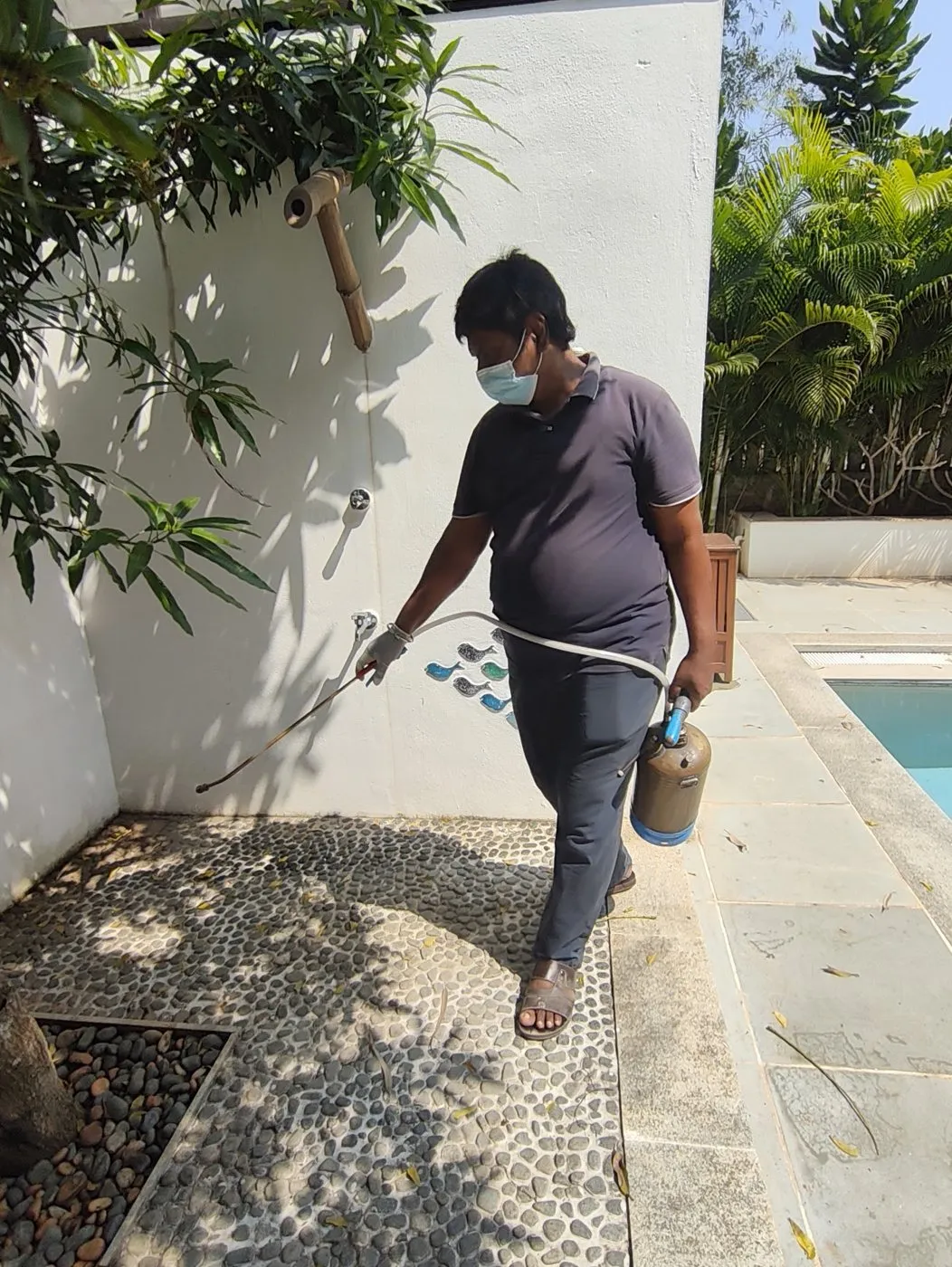
If your home is already built, termites can still be treated.
What happens:
- A technician inspects floors, skirting, door frames, wardrobes, false ceilings and the outside of the building.
- Small holes are drilled along the junction of floors and walls at regular intervals, and treated and sealed.
- The soil around the outside of the building is treated.
- Infested wood is treated directly where needed.
What to expect: the work usually takes a few hours to a day for a typical home, depending on its size and the level of infestation. Some furniture may need to be moved away from walls beforehand.
Pre-construction versus post-construction
| Pre-construction | Post-construction | |
|---|---|---|
| When | While the building is being built | After the building is finished |
| What is treated | Soil in trenches, plinth and backfill | Floor-wall junctions, outside soil, infested wood |
| Disruption | Minimal, no occupants | Some furniture may need moving |
| Best for | New villas, apartments and offices | Homes with signs of termites, or older buildings |
Signs of a termite problem
- Thin mud tubes on walls, door frames or skirting
- Hollow-sounding wood
- Doors and windows that stick
- Peeling or bubbling paint with no obvious cause
- Discarded wings near windows after rain
- Fine powder or tiny holes in wooden furniture
If you see any of these, get an inspection sooner rather than later.
What affects the cost of termite control
The price is usually set by:
- Built-up area of the property
- Pre- or post-construction work
- Level of infestation and how many areas are affected
- Access, for example furniture that must be moved or floors that must be drilled
- Warranty terms and follow-up visits
Any serious provider will inspect first and give you a written quote that spells these out. Be wary of a firm price over the phone without anyone seeing the property.
Questions to ask your provider
- Will you inspect before quoting?
- Is the treatment pre- or post-construction, and why?
- What method and products will you use?
- How long will the work take, and is there anything I need to prepare?
- What warranty do you give, and is it in writing?
- What happens if termites return?
After the treatment
Follow your technician’s advice on when you can clean and use the treated rooms. Fix leaks and damp areas, because termites are attracted to moisture. Keep wooden items and stored cardboard off the floor and away from walls, and have the building checked periodically, especially after heavy monsoon seasons.
Need termite control in Chennai? See our termite control service or call us for an inspection and a clear quote.